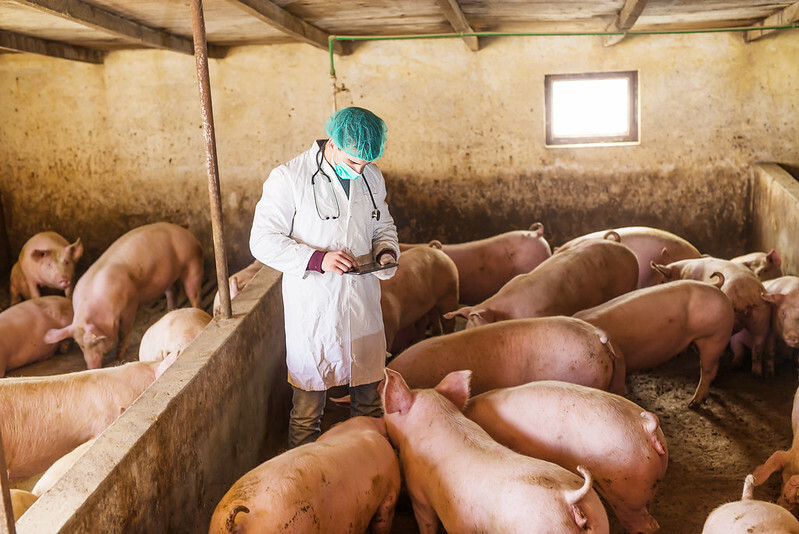
The Swine Teaching and Research Center at Penn Vet's New Bolton Center in Chester County, Pennsylvania, is celebrating its 25th anniversary this year. Over the past quarter-century, the center has significantly influenced veterinary medicine and agriculture, particularly in swine welfare practices both in Pennsylvania and beyond.
Read More
A foundational principle of the center is the ethical treatment of food animals. According to Chris Herr, executive vice president of the PennAg Industries Association, approximately 80% of sows in Pennsylvania are now housed in open pen systems rather than confined gestation crates. He attributes this shift to the impactful work of the Swine Center and its faculty.
Thomas Parsons, the founder and director of the Swine Teaching and Research Center, hails from a lineage of ten generations of farmers. After being recruited from a research position in Germany, he aimed to establish a working hog barn that exemplified animal welfare practices already in place in Europe but not yet common in the United States. This vision received support from then-Dean Alan M. Kelly, and the center was designed as a living laboratory, providing students with a modern learning environment.
While the center is renowned for promoting open pen housing and electronic feeding systems for pregnant sows, it has also contributed to advancements in swine health through the work of professor Gary Althouse in areas such as reproduction, toxicology, and disease control.
The center continues to evolve; in May, a ribbon-cutting event inaugurated DAT-AI-LAB, an initiative leveraging artificial intelligence to enhance the understanding of animal behavior and assist farmers, which Parsons described as "the next chapter in the Swine Center's journey."
Despite its strong reputation in animal agriculture research, the center prioritizes education, with alumni highlighting an animal-centered learning experience that encouraged them to pursue their passions through a swine-focused approach.