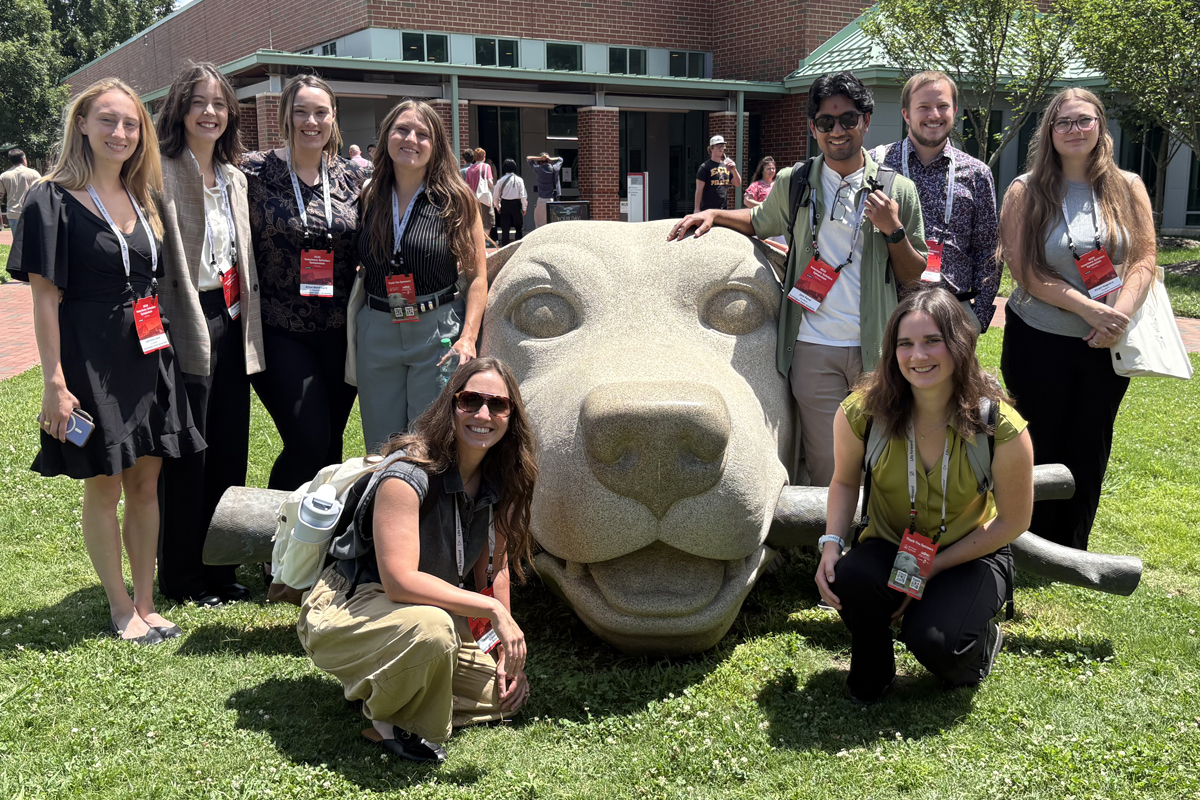
The Veterinary Student Summer Research Fellowship at Washington State University is a 10- to 12-week program aimed at first- and second-year veterinary students, providing them the opportunity to engage in biomedical research under faculty mentorship.
Read More
Participants develop practical research skills by assisting in various faculty labs and attending weekly seminars and workshops. The program culminates in a research symposium where students present their findings.
In the Summer of 2026, several students undertook significant projects. Anna is creating and assessing an innovative arthroscopy training model to help veterinary residents develop surgical skills and confidence before performing surgeries.
As an invasive tick expands its geographical range toward the Pacific Northwest, Caroline is mapping potential areas for its appearance. She utilizes environmental data to identify regions in Washington that could be vulnerable to the spread of the Asian longhorned tick.
Lorelei is conducting evaluations of three medications commonly used for primary canine glaucoma: latanoprost, dorzolamide, and a combination of dorzolamide with timolol, aiming to gather data on their effectiveness in dogs with naturally occurring glaucoma.
Ari, collaborating with Drs. Travis Brown and Giuseppe Giannotti, is investigating the potential of hyperbaric oxygen therapy to alleviate withdrawal symptoms and reduce relapse risks, research that may enhance future addiction treatment options.
Hanna is exploring the application of CRISPR gene-editing technology to bolster cattle's natural resistance to bovine respiratory disease, a study that could advance animal health and food production.
Airyel is focused on improving embryo transfer techniques to support advancements in veterinary and biomedical research by assessing reproductive methods that may enhance pregnancy success rates.
Jyot is studying the canine gut-brain axis, examining how interactions between the gut and brain might influence health and disease in dogs, while gaining hands-on experience in this emerging field.
Aspen's research involves analyzing how dairy cows' immune systems respond to health challenges at the molecular level, which could inform strategies for improving cow health and productivity.
Tessa is investigating Mycoplasma ovipneumoniae (M. ovi), a respiratory pathogen impacting sheep, while also examining its presence in wild bighorn sheep. Her research aims to clarify how this pathogen transfers between domestic and wild animal populations.