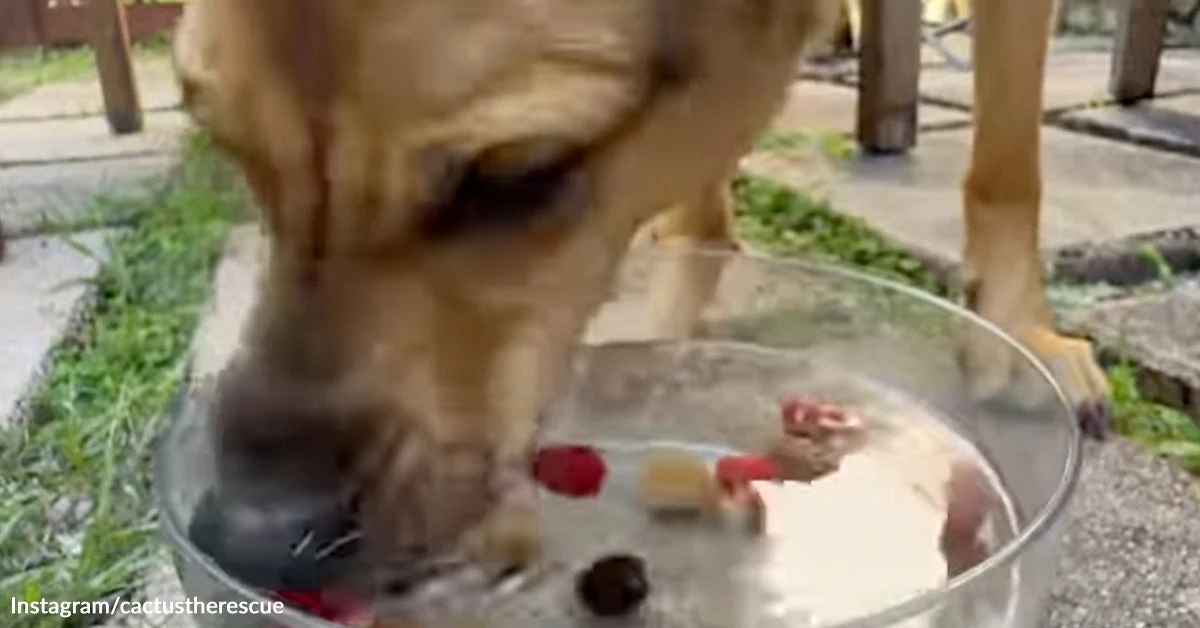
A recent video featuring a rescue dog named Cactus has captured the hearts of viewers as he attempts to bob for food for the first time. The footage highlights the loving bond between Cactus and his owner, Mike Brown, as they explore this interactive feeding activity together.
Read More
In the video posted on the account @cactustherescue, Brown introduced the challenge by filling a bowl with water and adding treats and berries, hoping Cactus would enjoy the popular activity. Initially, Brown prepared for success by positioning the bowl and even demonstrating how to bob for the snacks. However, the instructions did not translate well for Cactus, who approached the bowl with hesitation.
Instead of diving in for the treats, Cactus opted to drink from the bowl, seemingly prioritizing his thirst over the snacks. Brown's attempts to encourage Cactus highlighted the disconnect between human expectations and a dog's perspective. The dog's calm confusion created an endearing scenario where the human's enthusiasm contrasted with the dog's lack of understanding.
After several attempts to guide Cactus, Brown decided to abandon the bobbing experiment. He humorously acknowledged the outcome, stating, "Well, that didn’t go according to plan, mister," while offering Cactus the soggy treats directly.
Brown later shared that this was Cactus’s initial experience with bobbing for food. This detail emphasizes a common trend among pet owners, who often seek to engage their pets in similar activities after seeing success online. However, the reality can differ from the expectations set by social media.
Interactive feeding techniques, such as bobbing for treats, are promoted by trainers for their ability to stimulate a dog's natural instincts and provide mental exercise. These games can also slow down fast eaters and enrich daily routines. However, not every pet will grasp the concept immediately, especially if they are unfamiliar with the activity.
The experience with Cactus serves as a reminder for pet owners that introducing enrichment should be done gradually. Some dogs may need simpler or more visible options to understand how to engage in a new activity. Demonstrating these activities can also be more confusing than helpful, particularly for a rescue dog still building confidence.
The key is to maintain patience and adapt to a dog's reactions. Brown’s decision to hand-feed the treats when the game wasn't working illustrates the importance of ensuring enrichment remains positive instead of frustrating.
For those looking to try similar activities with their pets, the message is clear: starting small with simple tasks can lead to more successful and enjoyable experiences. Enrichment is less about perfect execution and more about fostering a relaxed and engaged relationship with your dog, enjoying the journey together, and sharing some treats along the way.