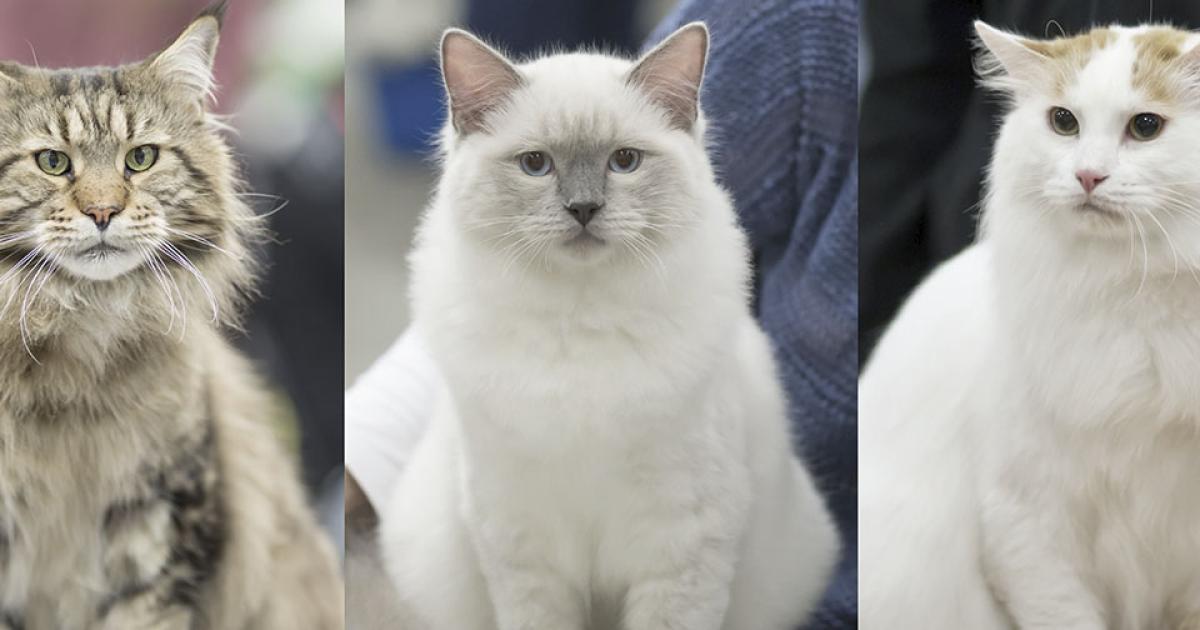
A study from the University of Helsinki has found significant heritable behavioral differences among various cat breeds, specifically in traits such as activity, aggressiveness, shyness, sociability, and stereotypical behavior. The research indicates that nearly half of these behavioral variations are genetically inherited.
Read More
While cats are popular pets, their behavior has been less studied compared to that of dogs. Doctoral student Hannes Lohi noted, "Dozens of international studies have been conducted on dog breeds’ behavior traits and heritability, whereas ours is the first study on behavior trait heritability in cats."
The study examined the heritability of behaviors in three breeds: Maine Coon, Ragdoll, and Turkish Van. These breeds were selected due to a sufficient number of survey responses and available parental data. The Maine Coon is related to Nordic breeds, while the Ragdoll aligns with Western European and American breeds, and the Turkish Van has distinct origins.
The research estimated the heritability of behavioral traits to vary from 0.40 to 0.50, indicating that hereditary variation accounts for approximately half of the differences observed. Despite the genetic diversity among the breeds, heritability estimates were similar.
Lohi explained that behavioral characteristics may also have evolved through selective breeding aimed at producing certain traits like activity levels or docility. Additionally, it is suggested that behaviors might be linked to other selected genetic traits, such as fur color.
The study utilized data from a feline behavior questionnaire collected from 6,000 cats across 40 breeds, making it one of the largest datasets on feline behavior worldwide. Lohi expressed gratitude to cat owners participating in the ongoing research and highlighted an ambitious goal to gather responses from over 20,000 cats to further explore these findings.